
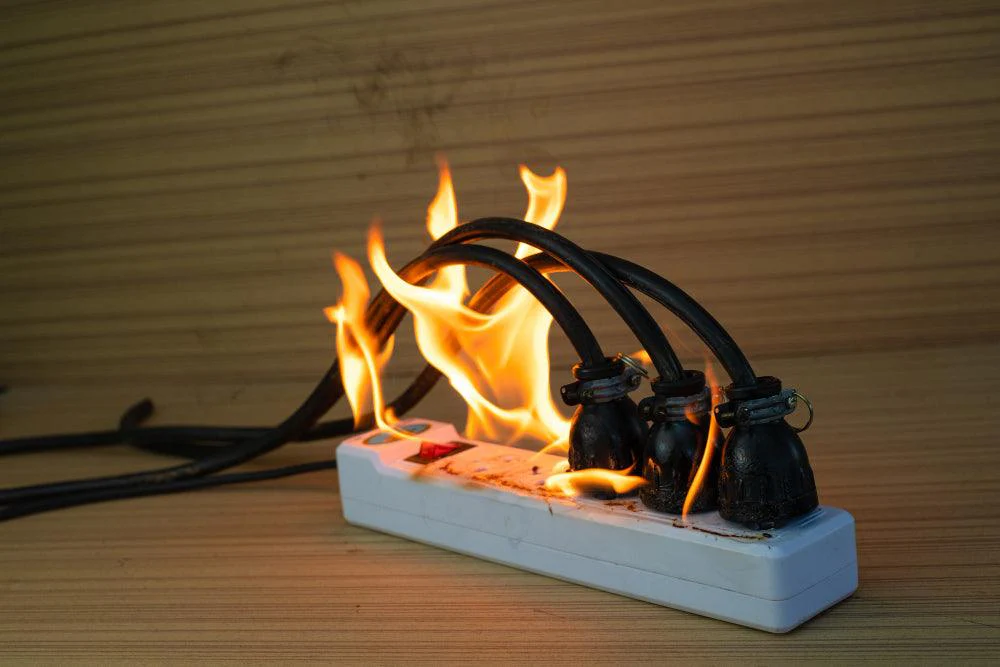
That humble power strip under your desk feels like a simple, harmless convenience. But the hard truth is that it could be one of the biggest fire risks in your home. Most people use them without a second thought, and that common mistake is at the heart of a shocking statistic: the U.S. Fire Administration reports that extension cords and power strips are involved in over 3,300 home fires every year. These aren’t just small electrical mishaps; they lead to deaths, injuries, and millions in property damage. The problem isn’t the concept of multiple outlets, but a fundamental misunderstanding of what that plastic strip is—and isn’t—designed to do.
The Critical Difference: Power Strips vs. Surge Protectors
A standard power strip is a device that provides multiple electrical outlets from a single source, essentially acting as an extension cord with more places to plug in your devices. It offers zero protection against electrical issues and can be a significant fire hazard if misused. Its only job is convenience, not safety.
A surge protector, while it often looks identical, is a crucial safety device. It’s designed to absorb and divert the excess energy from a power surge—a sudden, dangerous voltage spike—before it can reach and destroy your valuable electronics. As one master electrician put it, “A power strip is for convenience, not for protection. A surge protector is for protection. People often confuse the two, and that’s where the danger lies.”
So, What’s a Power Surge?
Think of the electricity in your home as water flowing steadily through a pipe. A power surge is like that pipe suddenly being hit with a massive, high-pressure blast of water. These spikes can come from lightning strikes miles away, issues with the power grid, or even high-powered appliances cycling on and off inside your own home. This sudden jolt of electrical energy is more than your sensitive electronics, like TVs and computers, can handle, leading to instant burnout.
Joules: Your Surge Protector’s Lifeforce
When you’re shopping for a surge protector, the joule rating is the most important number to look for. Think of it like a shield with a set amount of health points. A higher joule rating means the protector can absorb more energy from a surge before it fails. An electrical engineer I know uses a great analogy: “Think of the joule rating as a reservoir of protection. Every time your surge protector takes a hit from a power surge, that reservoir gets a little smaller. Eventually, it’s empty, and you’re left with no protection.” For expensive equipment like a home theater system or a computer, you should be looking for a rating of at least 1,000-2,000 joules.
The Top 3 Ways Your Power Strip Becomes a Fire Hazard
It’s not just about buying the right device; it’s about using it correctly. My team and I see the same dangerous mistakes being made over and over again. These are the absolute non-negotiables for electrical safety.
❌ Mistake #1: Overloading with High-Power Appliances
This is the cardinal sin of power strip usage. A Fire Department Safety Officer I spoke with said, “The number one mistake we see is people plugging high-draw appliances like space heaters into power strips. Those devices need to be plugged directly into the wall.” Power strips are not designed for the massive, continuous electrical load of appliances that heat or cool. One user shared a terrifyingly common story: “My roommate tried to run a portable AC unit through a power strip and it literally started smoking. We were lucky to be home to unplug it before a real fire started.”
Appliances to NEVER plug into a power strip:
- Refrigerators & Freezers
- Space Heaters
- Portable Air Conditioners
- Microwaves
- Coffee Makers
- Toasters or Toaster Ovens
- Hair Dryers
❌ Mistake #2: Daisy-Chaining
Daisy-chaining is when you plug one power strip into another to get more outlets. This is a massive fire code violation and an incredibly dangerous practice. Each connection point adds resistance and heat, creating a severe risk of overloading the original wall outlet and starting a fire. If your home looks like “a spaghetti factory of extension cords and power strips,” that’s a huge red flag that you need to call a licensed electrician to install more outlets.
❌ Mistake #3: Ignoring Its Age and Condition
Surge protectors are not immortal. Those protective components wear down with every small surge they absorb. Most manufacturers recommend replacing your surge protector every 3-5 years, or immediately after a major electrical event like a lightning strike nearby. As one user realized, “I never knew that surge protectors ‘wear out’. I’ve had the same one for probably 10 years. Definitely going to replace it now.” Look for tell-tale signs of failure: a ‘protection’ or ‘grounded’ indicator light that’s no longer lit, a faint buzzing sound, a plastic casing that’s warm to the touch, or any visible scorch marks.
Your No-Nonsense Guide to Buying Safe
Ready to do it right? It’s simple if you know what to look for. Don’t let a few dollars be the difference between peace of mind and a disaster.
✅ Insist on UL Certification: Always, always look for the UL (Underwriters Laboratories) logo on the packaging and the device itself. This means it has been independently tested and meets critical safety standards. A cheap, uncertified strip is a gamble you should never take.
✅ Buy for Your Needs: Don’t just grab the cheapest option. For a simple desk lamp and phone charger, a basic surge protector is fine. For your new OLED TV and sound system? You need a higher joule rating (2,000+) to properly protect that investment. That’s where digging into the details of The Safest Power Strips of 2026: A No-Nonsense Guide to Avoiding Disaster becomes essential.
✅ Consider Smart Features: Technology has improved these devices immensely. Exploring The Ultimate True Benefits of Smart Power Strips can open up options like remote control via your phone, energy monitoring, and scheduling—features that add convenience without compromising on safety.
The Ultimate Protection Strategy
While a good point-of-use surge protector is fantastic, the best defense is a layered one. Many electricians now recommend a whole-home surge protector as the first line of defense. This device is installed directly into your main electrical panel by a professional and protects every single outlet in your house from major external surges. You would still use your smaller, plug-in surge protectors for your sensitive electronics, but the whole-home unit takes the biggest hits, extending the life of everything in your house.
Final Action Plan: Secure Your Home in 5 Minutes
Let’s cut through the noise. Here’s what you need to do right now.
- Walk and Check: Go look at every power strip in your home. Is it a real surge protector? Is the ‘protected’ light on? Is it warm? Does it have a UL logo?
- Unplug the Villains: Immediately unplug any high-power appliance—space heaters, coffee makers, microwaves—from a power strip and plug it directly into a wall outlet.
- Destroy the Daisies: Find and dismantle any daisy-chained power strips. No excuses.
- Toss the Timeworns: If a surge protector is over 5 years old, discolored, or damaged in any way, throw it out and replace it. That small investment gives you a huge amount of peace of mind.