
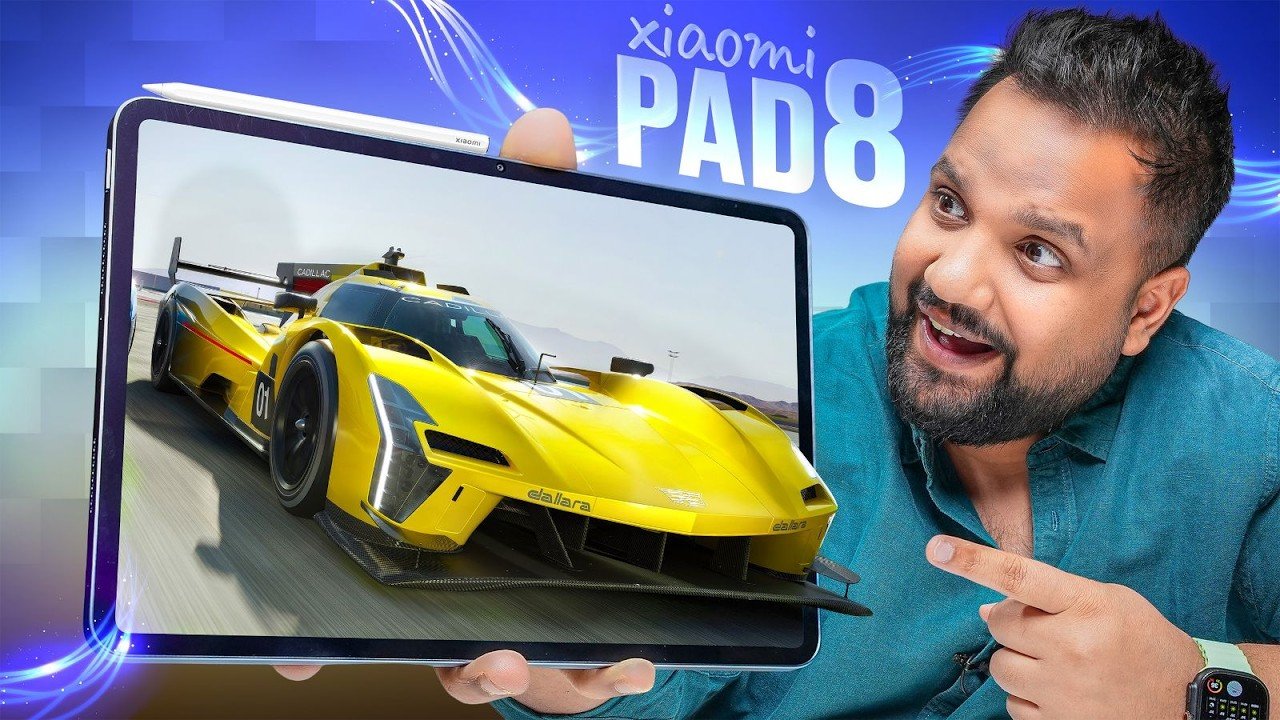
In a market saturated with options, finding a device that genuinely respects both your wallet and your demand for high performance can feel like a fool's errand. Yet, Xiaomi has consistently carved out a reputation for disrupting this very notion. Building on the formidable legacy of its predecessors, the Pad 6 and Pad 7, the new Xiaomi Pad 8 arrives not just as an iteration, but as a bold statement. It promises a more potent processor, a more substantial battery, and a design that’s impossibly sleeker than before.
On paper, the specifications are tantalizing, suggesting a near-perfect blend of power, portability, and price. But specs only ever tell half the story. After spending several days putting this tablet through its paces, I’ve uncovered the real-world nuances—the surprising triumphs and the minor, yet important, trade-offs. This is for the student juggling research papers and lectures, the casual gamer seeking a competitive edge without breaking the bank, and the productivity enthusiast who needs a reliable, versatile companion for their daily grind.
At a Glance
- Flagship-Tier Performance: Powered by the cutting-edge Snapdragon 8 Gen 4 processor, delivering exceptional speed for multitasking and demanding games.
- Sleeker, More Enduring Design: Despite being slimmer and lighter than its predecessor, it houses a larger 9,200 mAh battery for genuine all-day use.
- Immersive Media Experience: Features a vibrant 11.8-inch 144Hz IPS LCD display with Dolby Vision and a powerful quad-speaker setup with Dolby Atmos.
Design and Display: Refined Practicality
The Xiaomi Pad 8 is an excellent choice for users seeking a premium-feeling Android tablet with a brilliant display for media and a comfortable, portable form factor. Its all-aluminum build feels sturdy and refined, while the 144Hz screen with Dolby Vision support makes it a joy for streaming content.
My first impression upon unboxing the Pad 8 was one of refined engineering. Xiaomi has managed a fascinating trick here: they've increased the battery capacity while simultaneously making the chassis slimmer and lighter than the Pad 7. This isn't just a marginal difference; it’s a tangible improvement in portability that you feel every time you pick it up.
The entire chassis is crafted from a single block of aluminum, giving it a reassuringly sturdy and premium feel that belies its mid-range price point. There's zero flex or creak, a testament to its build quality. For my personal workflow, the 11.2-inch display size hits the sweet spot. It's large enough for immersive movie watching and split-screen productivity but remains manageable enough for one-handed use while reading or browsing.
At the back, the familiar squarish camera module makes a return, though it’s slightly thicker than on previous models. I initially worried this would cause significant wobble on a flat surface, a common annoyance with modern devices. However, my fears were unfounded; the tablet remains remarkably stable when laid on a desk, a small but crucial detail for anyone who types or draws with the device flat.
One of the few design quirks I encountered is the placement of the USB-C port. While its USB 3.2 spec with video-out is a fantastic, pro-level feature, its off-center position between the bottom speaker grilles is a minor but noticeable aesthetic misstep for those who appreciate symmetry.
A Display That Punches Above Its Weight
The visual centerpiece of the Pad 8 is its 11.8-inch IPS LCD display. This isn't just any panel; it's a 12-bit screen capable of displaying 68.7 billion colors. The result is stunningly rich and accurate visuals. When streaming content on YouTube or Netflix, the display truly comes alive, thanks to its 800 nits of peak HDR brightness and full support for Dolby Vision.
The screen also boasts a 144Hz peak refresh rate, which translates to incredibly smooth scrolling and animations. While the general user interface and most applications run at a maximum of 120Hz, certain supported games can take full advantage of the 144Hz capability, offering a buttery-smooth gaming experience that can provide a real competitive advantage.
My review unit came with the optional nano-textured coating, a feature designed to minimize glare and reflections. It works exceptionally well in this regard, making the tablet much more usable in brightly lit environments. However, this finish comes with two caveats: it does tend to pick up fingerprints rather easily, requiring frequent wiping, and it can slightly reduce visibility when viewed from extreme angles. For most users, especially those who plan to use it primarily indoors, the standard display will be more than sufficient.
Unrivaled Performance in its Class
This is where the Xiaomi Pad 8 truly distances itself from the competition. The leap to the Snapdragon 8 Gen 4 chipset is the single most significant upgrade, catapulting the tablet into a performance tier typically reserved for devices costing twice as much.
Combined with UFS 4.1 storage on the 256GB model I tested, the real-world experience is one of absolute immediacy. Apps launch in an instant, and complex multitasking scenarios are handled without breaking a sweat. During my testing, I was able to run two apps in a split-screen view while simultaneously having two additional floating windows open on top—a workflow that would bring lesser tablets to their knees. The Pad 8 handled it with remarkable ease, a clear demonstration of the raw power of the new chipset.
Benchmarks and Real-World Gaming
For those who appreciate hard data, the benchmark scores are deeply impressive. The Pad 8 scored approximately 2.37 million in AnTuTu 11, a figure that firmly places it in the upper echelon of mobile devices. Geekbench 6 results were similarly strong, aligning with expectations for a Snapdragon 8 Gen 4 device.
More importantly, the tablet demonstrates excellent sustained performance. In a grueling 30-minute CPU throttling test with 40 threads engaged, the Pad 8 maintained an astonishing 90% of its peak performance. This is where its larger form factor becomes a thermal advantage, allowing it to dissipate heat more effectively than a smartphone. The result is a device that doesn't aggressively throttle, ensuring consistent performance even during extended, heavy use.
This thermal efficiency translates directly to a superior gaming experience. In the GPU-intensive 3DMark Solar Way benchmark, it posted an average of 29.75 frames per second. The Wildlife Extreme Stress Test revealed a stability score of 91.3% with a best loop score of 4254. When I played Ark Knight's Endfield, a graphically demanding title, the tablet consistently averaged 44.2 FPS, with surface temperatures peaking at a very comfortable 38°C. This means you can game for hours without the device becoming uncomfortably hot or experiencing significant performance drops.
Software and User Experience
The Pad 8 runs on Hyper OS3, which is based on Android 16. Xiaomi has done an admirable job of tailoring the software experience for the larger tablet screen. The interface is clean, the animations are fluid, and the entire system feels incredibly responsive. Features like a persistent dock, which can be summoned from within any app, make switching between tasks seamless.
The multitasking capabilities are robust and intuitive. You can easily drag and drop apps into split-screen or launch them in resizable floating windows. This level of flexibility makes the Pad 8 a surprisingly capable device for productivity, almost blurring the line between a tablet and a lightweight laptop, especially when paired with the Creator's Edition accessories like the Xiaomi Focus Pen Pro. The promise of 4 years of OS updates and 6 years of security updates is a massive value-add, ensuring the device remains secure and up-to-date for years to come, a commitment not often seen in this price segment.
One glaring omission, however, is the lack of a fingerprint scanner. In an age where biometric security is standard, having to rely on a PIN or pattern feels like a step back. While face unlock is present, a physical scanner embedded in the power button would have been a much more secure and convenient addition.
Battery Life and Charging
Inside its slim frame, the Xiaomi Pad 8 houses a hefty 9,200 mAh battery. This upgraded capacity delivers truly solid endurance. Throughout a full day of mixed usage—which for me included several hours of video streaming, web browsing, checking emails, and a couple of gaming sessions—the tablet comfortably made it to the end of the day with power to spare. This reliable battery life is critical for students taking it to class or professionals using it on the go, removing the anxiety of constantly searching for a power outlet. When you do eventually need to top up, the device supports 45W fast charging, and Xiaomi generously includes a 67W charger in the box, ensuring you get back to full power quickly.
Statistical Breakdown
| Feature | Details |
|---|---|
| Processor | Qualcomm Snapdragon 8 Gen 4 |
| Display | 11.8-inch IPS LCD, 144Hz, Dolby Vision, 800 nits peak brightness |
| Battery | 9,200 mAh |
| Charging | 45W Fast Charging (67W charger included) |
| RAM/Storage | Up to 12GB RAM, 128GB (UFS 3.1) or 256GB (UFS 4.1) Storage |
| Software | Hyper OS3 (based on Android 16) |
| Update Promise | 4 Years of OS + 6 Years of Security Updates |
| Cameras | 13MP Rear, 8MP Front |
| Audio | Quad Speakers with Dolby Atmos |
| Ports | USB Type-C 3.2 (with video out) |
| AnTuTu 11 Score | ~2.37 million |
| CPU Throttling | ~90% of peak performance sustained over 30 mins |
| Gaming Temp | Max 38°C (tested with Ark Knight's Endfield) |
Pros & Cons
The Good
- Exceptional Performance: The Snapdragon 8 Gen 4 offers flagship-level speed that is unmatched at this price point.
- Excellent Sustained Performance: Superb thermal management prevents throttling during long gaming or work sessions.
- Vibrant, Smooth Display: The 144Hz panel with Dolby Vision is perfect for entertainment and productivity.
- Premium Build Quality: The all-aluminum chassis feels sturdy, slim, and light.
- Long-Lasting Battery Life: The 9,200 mAh battery easily lasts a full day of heavy use.
- Generous In-Box Contents: Including a 67W fast charger is a great value-add.
- Future-Proof Software: A fantastic promise of 4+6 years of software and security updates.
- Pro-Level Connectivity: USB-C 3.2 with video-out expands its versatility for productivity.
The Bad
- No Fingerprint Scanner: The lack of a physical biometric scanner is a notable omission for security and convenience.
- Asymmetrical Port Design: The off-center USB-C port is a minor but jarring design choice.
- Nano-Textured Display Issues: The optional anti-glare screen is a fingerprint magnet and can impact viewing angles.
- Price Increase: While still a great value, it is priced higher than its predecessors.
Final Verdict & Rating
The Xiaomi Pad 8 is a masterclass in delivering targeted, high-impact upgrades. While the price has crept up, every single rupee of that increase feels justified by the monumental leap in performance, the larger battery, and the refined, portable design. It focuses on the core pillars of the user experience—speed, display quality, and endurance—and absolutely nails them.
It’s not without its minor flaws. The absence of a fingerprint scanner is perplexing, and the off-center port is a strange quirk. However, these are small trade-offs in the grand scheme of what this tablet offers. It provides a level of power and stability that confidently rivals high-end flagship tablets from competitors like Samsung, making it an incredible tool for more than just media consumption. Whether you're a student who needs a reliable device for note-taking and research, a remote worker looking for a portable second screen with features like video-out (a feature often missing even in more expensive devices like the Samsung S26 Ultra In-Depth Review: The Privacy Display Revolution or Just an Iteration?), or a gamer wanting a big screen to dominate the competition, the Pad 8 is up to the task.
With launch offers bringing the effective price down to ₹30,999 and an extra year of warranty, the value proposition becomes undeniable. The Xiaomi Pad 8 isn't just a good Android tablet; it is, without a doubt, the most powerful and well-balanced Android tablet you can buy for under ₹40,000. It's an easy and enthusiastic recommendation.
Rating: 9.2 / 10