Smartphone reviews, tips, news, guides, and updates for Android & iPhone.

Power Strip vs. Power Conditioner: The Unfiltered Truth Your Gear Deserves
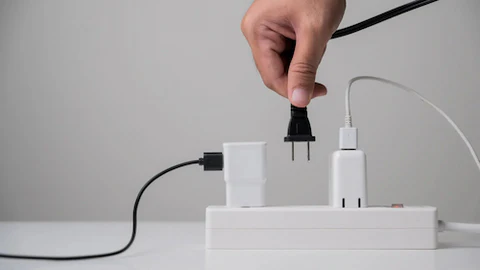
A nagging question persists in any setup where high-quality electronics are involved: is the cheap, multi-outlet strip from the hardware store good enough, or do you need to invest in something more substantial? You've spent a significant sum on your computer, your home theater, or your audio rig. The last thing you want is for it to be damaged by a power surge or handicapped by 'dirty' electricity. This brings us to the core conflict between two often-confused devices: the power strip and the power conditioner.
In a Nutshell
- A power strip is for convenience, offering multiple outlets from a single source with basic overcurrent protection.
- A surge protector (a type of power strip) adds a layer of defense against voltage spikes, measured in joules. It's the minimum you should consider for valuable electronics.
- A power conditioner does everything a surge protector does but adds advanced filtering and regulation to actively 'clean' and stabilize the power your devices receive.
Understanding the Humble Power Strip
A power strip is, at its most basic, an extension cord with several outlets and a built-in circuit breaker. Its primary job is simple expansion, letting you power multiple devices from one wall socket. The circuit breaker offers rudimentary protection, tripping to cut power if you draw too much current and create a potential fire hazard. This is a crucial safety feature detailed in our guide to preventing power strip overloads.
Many devices sold as power strips are actually surge protectors. They add an essential feature: Metal Oxide Varistors (MOVs) that absorb and divert excess voltage during a power surge, protecting your connected equipment. The capacity of this protection is measured in joules; a higher number means it can absorb more energy before failing. If you're unsure what you own, it's worth learning how to know if your power strip is a surge protector.
For most everyday applications—charging a phone, powering a lamp, running a desktop computer in an area with stable electricity—a high-quality surge protector is perfectly adequate.
What Makes a Power Conditioner Different?
A power conditioner is an advanced surge protector that adds active circuitry to filter, clean, and stabilize the AC power delivered to your equipment. Think of it less as a simple gatekeeper and more as a dedicated purification system for electricity. It addresses problems that a basic surge protector simply ignores.
Core Functions: Filtering and Regulation
Power conditioners tackle two main issues: electrical noise and voltage instability.
They filter out Electromagnetic Interference (EMI) and Radio Frequency Interference (RFI). This 'noise' is generated by everything from your refrigerator's compressor to nearby radio towers and can manifest as audible hiss in speakers or visual artifacts on a screen.
Higher-end models also provide Automatic Voltage Regulation (AVR). The power from your wall isn't always a perfect 120 volts. It can sag during a brownout or swell momentarily. AVR acts like a governor, correcting these fluctuations to provide a stable, consistent voltage, which is far healthier for sensitive electronic components.
The Great Debate: Snake Oil or Essential Gear?
This is where the conversation becomes truly contentious. The tangible benefits of power conditioning are one of the most hotly debated topics in the home theater and audiophile communities. The opinions are deeply divided and often based on personal experience rather than objective measurement.
Voices from the Trenches: User Experiences
For every user who reports a night-and-day difference, there is another who claims it's all in your head. One user on Reddit, for instance, noted that a Furman conditioner immediately eliminated a "nasty hiss" from his bass amp. This is a classic example of successful RFI filtering.
Conversely, a skeptical user on an A/V forum might argue that any modern, well-engineered piece of electronics already has a robust internal power supply designed to filter out this noise. An engineer on the Audio Science Review forum supports this, stating that if an external conditioner makes an improvement, it implies your gear's own power supply is inadequate.
There's also a significant camp of audiophiles who believe that some conditioners can actually be detrimental to performance. They argue that certain designs can limit the current available to power-hungry amplifiers, compressing dynamics and making the music sound less lively.
The Problem of Proof: Audiophile vs. Industrial
One of the biggest challenges in assessing the value of a power conditioner is the lack of hard data from many 'audiophile' brands. These companies often rely on subjective testimonials and elegant marketing to sell products that can cost thousands of dollars.
In stark contrast, industrial power-quality manufacturers provide detailed specifications, including noise attenuation measured in decibels (dB) across various frequency ranges. This creates a tale of two markets: one based on measurable performance and another often based on faith. This discrepancy is a critical point to consider before investing heavily.
When Should You Spend the Extra Money?
Ultimately, the decision comes down to your specific use case, environment, and tolerance for risk.
A quality surge protector from The Ultimate Surge Protector Power Strip Guide for the Modern Home Office is the right choice for the vast majority of users. It provides the essential protection needed for computers, televisions, and other standard electronics without the significant cost of conditioning.
However, a power conditioner becomes a justifiable, and sometimes necessary, investment in a few key scenarios:
- High-End Audio/Video Setups: If you have invested thousands in a home theater or stereo system, a conditioner can provide the clean power needed to unlock its full potential, ensuring a lower noise floor (blacker blacks, silent backgrounds).
- Recording Studios: In a professional or home studio environment, eliminating electrical noise is not a luxury; it's a necessity to achieve clean recordings.
- Unstable Power Environments: If you live in an older building with questionable wiring, or near industrial facilities, your power grid is likely to be much 'dirtier' and less stable. Here, a conditioner with AVR is a powerful defensive tool.
Frequently Asked Questions
Is a UPS the same as a power conditioner?
No, though they share some functions. An Uninterruptible Power Supply (UPS) is primarily a battery backup, designed to keep your equipment running during a total power outage. While many line-interactive and online UPS models offer excellent power conditioning and AVR, their main purpose is providing emergency power, whereas a dedicated power conditioner's sole focus is cleaning the power it passes through.
Can a power conditioner actually make my audio sound worse?
It's possible, particularly with powerful amplifiers. Some audiophiles report that conditioners, especially those with transformers not rated for high-current draw, can 'choke' an amplifier, limiting its ability to reproduce dynamic peaks in music. For this reason, many enthusiasts plug their amplifiers directly into the wall or into a conditioner with specific high-current, non-filtered outlets.
Will a power conditioner fix ground loop hum?
A ground loop hum is a specific 60Hz (or 50Hz) noise caused by multiple ground connections creating a voltage differential. While a power conditioner might reduce it slightly by filtering other noise, it is not designed to solve this specific problem. A dedicated ground loop isolator is the proper tool for that job.
The Final Verdict
I hold that for the vast majority of people, a robust, well-made surge protector is the most sensible investment. It offers the critical protection against catastrophic events that can destroy your equipment. It's the full package of safety and value.
A power conditioner is a specialist's tool. It is not snake oil, but its benefits are most apparent in specific, demanding situations. If you are a dedicated audiophile, a recording musician, or someone plagued by visibly or audibly 'dirty' power, a power conditioner is a logical and powerful upgrade. For everyone else, your money is better spent elsewhere in your system. It's a tool for optimization, not a fundamental necessity.
References / Sources
[1] Wikipedia – Electromagnetic interference
[2] Sweetwater – Power Conditioner, Voltage Regulator and UPS differences explained
[3] Audio Science Review Forum