
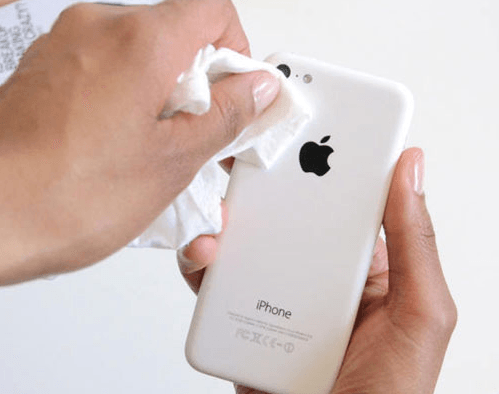
Modern smartphone camera modules utilize highly engineered multi-element optics. To maximize light transmission and minimize surface tension, manufacturers apply nanometer-thick anti-reflective (AR) and oleophobic (oil-repelling) fluoropolymer coatings to the outermost glass. While the underlying glass—often synthetic sapphire or specialized hardened glass—is highly scratch-resistant, these surface coatings are extremely fragile.
Optical degradation, often perceived by users as a hardware defect or a failing sensor, is almost entirely caused by the chemical stripping of these coatings or the introduction of micro-abrasions through improper maintenance.
Mechanics of Micro-Abrasions: The Silica Dust Factor
A prevalent misconception is that wiping a smartphone lens with cotton fabric (such as a t-shirt) directly scratches the glass. In reality, the fabric itself lacks the structural hardness to damage the lens. The actual cause of the damage involves environmental particulate matter.
In highly polluted or dusty urban environments, airborne silica dust frequently settles on devices. On the Mohs scale of mineral hardness, quartz-based silica ranks at a 7, which is harder than many of the factory coatings applied to smartphone lenses. When a user wipes their phone with a garment, the fabric traps these microscopic silica particles and drags them across the optics under pressure. This acts as a localized abrasive pad, carving micro-scratches into the AR coating. Over time, these microscopic abrasions scatter incoming light, resulting in severe lens flaring, especially noticeable in low-light environments with concentrated light sources (like streetlamps).
Environmental Variable: High Humidity and Lipid Emulsion
In tropical or high-humidity regions, storing a mobile device in a pocket creates an adverse microclimate. The combination of body heat and atmospheric moisture causes micro-condensation on the lens surface. When this condensation mixes with lipid deposits (sebum from human skin) left by accidental fingerprints, it forms a stubborn emulsion.
Removing this emulsion requires specific chemical and physical interventions. Standard household glass cleaners contain ammonia, which acts as a corrosive agent against fluoropolymer oleophobic coatings. Repeated exposure to ammonia completely strips the oil-repelling layer, leaving the raw glass exposed. Consequently, the lens will attract and retain skin oils at an accelerated rate, permanently reducing image sharpness.
Cleaning Material Scratch Risk
Protocol for Optical-Grade Maintenance
Restoring and maintaining lens clarity requires an objective, two-stage approach designed to mitigate friction and chemical degradation.
Phase 1: Particulate Displacement via Fluid Dynamics
Before physical contact is made with the lens, all abrasive silicates must be displaced. The industry standard utilizes a manual silicone air blower (often referred to as a rocket blower).
Technical Warning: Pressurized air canisters (canned air) must be strictly avoided. These canisters utilize fluorocarbon propellants. If tilted, they eject a sub-zero liquid refrigerant. When this freezing liquid contacts a warm smartphone lens, the rapid thermal shock can instantly shatter the glass or severely compromise the weather-sealing adhesive surrounding the camera module.
Phase 2: Chemical Lift and Microfiber Trapping
Once abrasive particles are removed, the lipid emulsion must be dissolved. For stubborn oils, optical-grade Isopropyl Alcohol (IPA) should be utilized, but the concentration is critical.
A 70% IPA solution is optimal. While 99% IPA is often assumed to be superior, its evaporation rate is too rapid to effectively break down heavy organic lipids. The 30% purified water content in a 70% solution provides the necessary surface tension and dwell time to lift the oils from the glass without damaging the AR coating.
The solution must be applied directly to a tightly woven, optical-grade microfiber cloth—never directly to the device chassis—and wiped in a single, unidirectional motion to pull the contaminants off the edge of the lens, preventing redistribution.
Conclusion: The Flaw in Secondary Lens Protectors
A common consumer response to lens vulnerability is the application of aftermarket tempered glass lens protectors. From a technical optics standpoint, this introduces a severe degradation of image quality.
Placing a secondary layer of glass over the primary lens introduces an uncontrolled air gap. This gap alters the refractive index, causing light to bounce between the factory lens and the protector before reaching the sensor. This dramatically increases internal ghosting, reduces autofocus speed by confusing the LIDAR or laser-focus sensors, and introduces a soft focus effect across the entire image frame. The structurally sound approach is not to cover the factory lens with inferior glass, but to preserve the original nano-coatings through strict, abrasive-free maintenance protocols.