
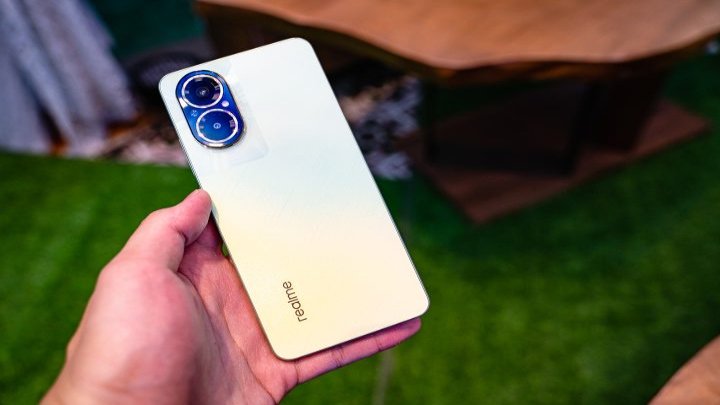
I know what you’re thinking. A 5G phone for under ten thousand rupees? It sounds too good to be true, and frankly, a bit suspicious. You’re right to be cautious. For years, “budget phone” meant frustrating lag, terrible photos, and a battery that died by lunchtime. But the game has changed. It is now entirely possible to get a phone that connects to super-fast 5G internet without emptying your wallet, but it comes with critical trade-offs you absolutely need to understand before you buy.
This isn’t just about a ‘5G sticker’ on the box; it’s about making a smart choice. The core mission of these phones is to deliver that next-generation speed at the lowest price point imaginable. To do this, manufacturers are making very specific, calculated sacrifices. We’re going to break down exactly what you gain, what you lose, and how to pick a winner that feels like a steal, not a mistake.
Recommended Products
Amazon Best Sellers: Best Cell Phones
Cell Phone, Android Smartphone Unlocked …

UMIDIGI 6.5-inch Unlocked Smartphone …
Quick Summary
- Performance is Surprisingly Good: For the first time, phones in this price range are smooth for daily tasks like browsing, social media, and video streaming. Don’t expect to play high-end games at max settings, but the frustrating lag of old budget phones is largely gone.
- Battery is Massive, Charging is Not: You will almost always find a huge 5000mAh or 6000mAh battery that easily lasts all day. The catch? Charging it back up will be a very slow process, often taking several hours.
- Cameras and Software Are a Gamble: The biggest compromises are in the camera and the software. Photos are fine in bright daylight but suffer badly in low light. Additionally, some phones come loaded with unwanted apps (bloatware) and ads, while others offer a clean, user-friendly experience.
Core Strengths: The New Budget Baseline
Modern processors in these budget devices now deliver a smooth, lag-free experience for everyday use. Combined with huge batteries, these phones have solid fundamentals for browsing, streaming, and communication, making them reliable daily drivers for most people.
In observing market shifts over the last quarter, a clear pattern has emerged: brands are laser-focused on nailing three key areas in the sub-₹10k 5G segment. They’ve figured out the non-negotiables for a happy user.
Blazing 5G Speeds on a Budget
The main event is, of course, 5G. The whole point of these phones is to give you access to faster downloads, smoother video calls, and more reliable connections. And they deliver. You get the speed without the premium price tag that was attached to 5G just a couple of years ago.
All-Day (and Sometimes Two-Day) Battery Life
This is the undisputed champion feature of the budget 5G phone. Manufacturers are putting massive 5000mAh or even 6000mAh batteries into these devices.
A user of the Samsung F14 raved about its massive 6000mAh battery, stating it connects to 5G everywhere.
What does this mean for you? It means you can leave your charger at home. It means a full day of heavy use—streaming, browsing, navigating with maps—without getting battery anxiety. For a deeper dive into what affects battery longevity, check out our guide on Phone Battery Life: The Real Story on How Long It Lasts.
Performance That Won’t Frustrate You
Let’s be clear: these are not gaming powerhouses. But thanks to newer, more efficient chips like the MediaTek Dimensity series or Snapdragon’s 4-series, they handle daily tasks with surprising grace.
As one tech reviewer put it, “For the first time, getting a phone under ten thousand doesn’t feel like a huge sacrifice in performance. The new chips handle daily tasks without frustrating lag.”
Switching between WhatsApp, Instagram, and YouTube feels snappy. Browsing the web is smooth. The days of waiting seconds for the keyboard to pop up are, thankfully, behind us. A user of the Poco M6 Pro was surprised by how smooth it is for the price, calling the battery a “beast.”
The “5G Tax”: Where Corners Are Cut
To afford the 5G chip and massive battery, manufacturers significantly cut costs in other areas. The most noticeable compromises are consistently in camera quality (especially in low light), charging speed, and sometimes the display technology and resolution.
This is the most critical part to understand. To give you that 5G speed and monster battery, something had to give. A gadget analyst summarized it perfectly: “Brands are putting all their money into the 5G chip and a big battery. Everything else… is where they cut costs.”
Camera: Good in Sun, Grainy in Shade
The camera is almost always the biggest sacrifice. While the box might boast a 50MP sensor, the quality of that sensor and the software processing it are where costs are saved.
- Daylight Photos: In bright, sunny conditions, you’ll get perfectly usable photos for social media.
- Low-Light Photos: As soon as the sun goes down or you move indoors, the quality drops off a cliff. Photos become grainy, blurry, and lack detail. A Lava Blaze 2 user noted that while they love the clean software, the camera is “honestly not good for Instagram photos at night.”
| Feature | What You Get Under ₹10k | The Hidden Compromise |
|---|---|---|
| Main Camera | Often a 50MP sensor | Small sensor size, poor software processing |
| Low Light | Night mode might exist | Photos are often noisy and unusable |
| Video | Usually capped at 1080p | Lacks stabilization, resulting in shaky video |
| Selfie Camera | Basic 8MP sensor | Struggles indoors, soft details |
Charging Speed: A Test of Patience
You get a massive battery, but filling it back up feels like it takes an eternity. While high-end phones boast charging speeds of 67W or even 120W, budget 5G phones are typically stuck with 18W or 25W charging.
The Samsung F14 user who loved the 6000mAh battery also mentioned a major drawback: “charging it feels like it takes forever.”
Think of it this way: a full charge from empty can easily take over two, sometimes close to three hours. You’ll need to plan your charging sessions, typically overnight.
Critical Details Most Buyers Overlook
Beyond the obvious specs, two factors can make or break your experience with a budget 5G phone: the number of supported 5G bands and the software experience. Ignoring these can lead to buyer’s remorse.
The Common Mistake: Ignoring 5G Bands
This is the single most important technical detail to check. A phone isn’t just “5G or not 5G.” It supports specific frequency bands. More bands mean your phone can connect to 5G in more locations and with different carriers.
A frustrated user shared, “Don’t just look at the ‘5G’ sticker. I checked and my friend’s cheap 5G phone doesn’t support all the bands my carrier uses, so his connection is spotty.”
Quick Action Plan: Before buying, search for “[Your Carrier Name] 5G bands in [Your City]” and compare that list to the phone’s supported bands on its official product page. A phone with 11-13 bands is a much safer bet than one with only 5-7.
Software: The Clean vs. Cluttered Battle
The software experience is a night-and-day difference between brands. It dramatically affects how fast the phone feels.
The Bloatware Problem
Some brands, like Xiaomi (Poco, Redmi) and Realme, load their phones with pre-installed apps, often called bloatware. These are apps you didn’t ask for and often can’t uninstall. They clutter your app drawer and can sometimes push ads or notifications. One Poco user said they “had to remove a bunch of junk apps first” to enjoy the phone. This kind of software can even pose security risks, a topic we explore in Your Android Phone Has a Trust Issue—Here’s Why.
The Clean Android Advantage
Brands like Motorola and Lava often use a “stock” or near-stock version of Android. This means no bloatware, no ads, and a cleaner, simpler interface that many users find faster and more pleasant to use.
A mobile journalist gave this advice: “Pay close attention to the software. A phone with clean software feels faster than a phone with slightly better specs but bogged down by ads and bloatware.”
Long-Term Software Support: A Hidden Value
Will your budget phone get the next version of Android? How long will it receive security patches? Most budget phones offer a very limited update promise—often just one major OS update and two years of security patches. In contrast, some brands like Samsung are offering longer support even on budget models, which adds significant long-term value. This is a crucial factor if you plan to keep your phone for more than a year or two.
Budget Allocation in a Sub-₹10k 5G Phone
Here’s a visual breakdown of where your money typically goes:
Realistic Expectations: Gaming and Resale Value
It’s important to have a realistic mindset when buying in this category. These phones are designed for utility, not luxury or high-performance gaming. Understanding their limitations will help you appreciate their strengths.
Can You Game on a Sub-₹10k 5G Phone?
Yes, but manage your expectations. These phones can handle popular casual games like Candy Crush or Subway Surfers without any issues. However, they will struggle with graphically demanding titles like Genshin Impact or Call of Duty: Mobile at high settings. You’ll likely need to lower the graphics to achieve smooth gameplay.
The Hard Truth About Resale Value
Here’s a hot take that most reviews won’t tell you: think of this phone as a 1-to-2-year tool, not a long-term investment. The resale value for budget Android phones is extremely low. After two years, it will be worth next to nothing. And that’s okay. The goal here isn’t to get a return on your investment; it’s to get maximum utility—fast internet and a reliable daily driver—for the lowest possible upfront cost. For more on this, our Ultimate Smartphone Buying Guide 2026 provides a broader perspective on a phone’s lifecycle.
FAQs: Quick Answers to Your Top Questions
Do 5G phones under ₹10,000 have good camera quality?
Camera quality is decent in daylight but poor in low-light conditions. These phones are suitable for casual photos for social media but are not designed for serious photography, especially at night or indoors where images can appear grainy and lack detail.
Is it worth sacrificing features like a better camera for 5G connectivity?
If your priority is fast internet speed for streaming, browsing, and future-proofing your device, then yes. However, if you are a heavy camera user who takes many photos in various lighting conditions, you might be better off with a slightly more expensive 4G phone that invests more in its camera system.
How many 5G bands should I look for in a budget phone?
You should look for a phone that supports as many 5G bands as possible, ideally 10 or more. A higher number of supported bands ensures better compatibility with different carriers and more consistent 5G coverage as networks expand.
Conclusion: Your Smart Purchase Action Plan
Getting a fantastic 5G experience for under ₹10,000 is no longer a dream. It’s a reality, but one that requires a smart, informed decision. You’re not just buying a spec sheet; you’re choosing a set of priorities. You are getting lightning-fast internet and a battery that refuses to die. In exchange, you are accepting a camera that’s best used outdoors and charging speeds that require overnight commitment.
Here’s your final action plan:
- Prioritize Your Needs: Are you a social media browser who just needs a phone that works? Or are you an aspiring photographer? If it’s the latter, this segment may not be for you.
- Check the 5G Bands: This is non-negotiable. Confirm the phone supports your carrier’s main 5G bands.
- Decide on Software: Do you want the clean, no-fuss experience of stock Android, or are you willing to deal with bloatware for potentially different hardware features?
By following this guide, you can confidently choose a budget 5G phone that delivers incredible value and feels like a major upgrade, not a compromise. Happy hunting!