Smartphone reviews, tips, news, guides, and updates for Android & iPhone.

Action Camera vs. Smartphone: Outdoor Capture Showdown for Adventurers
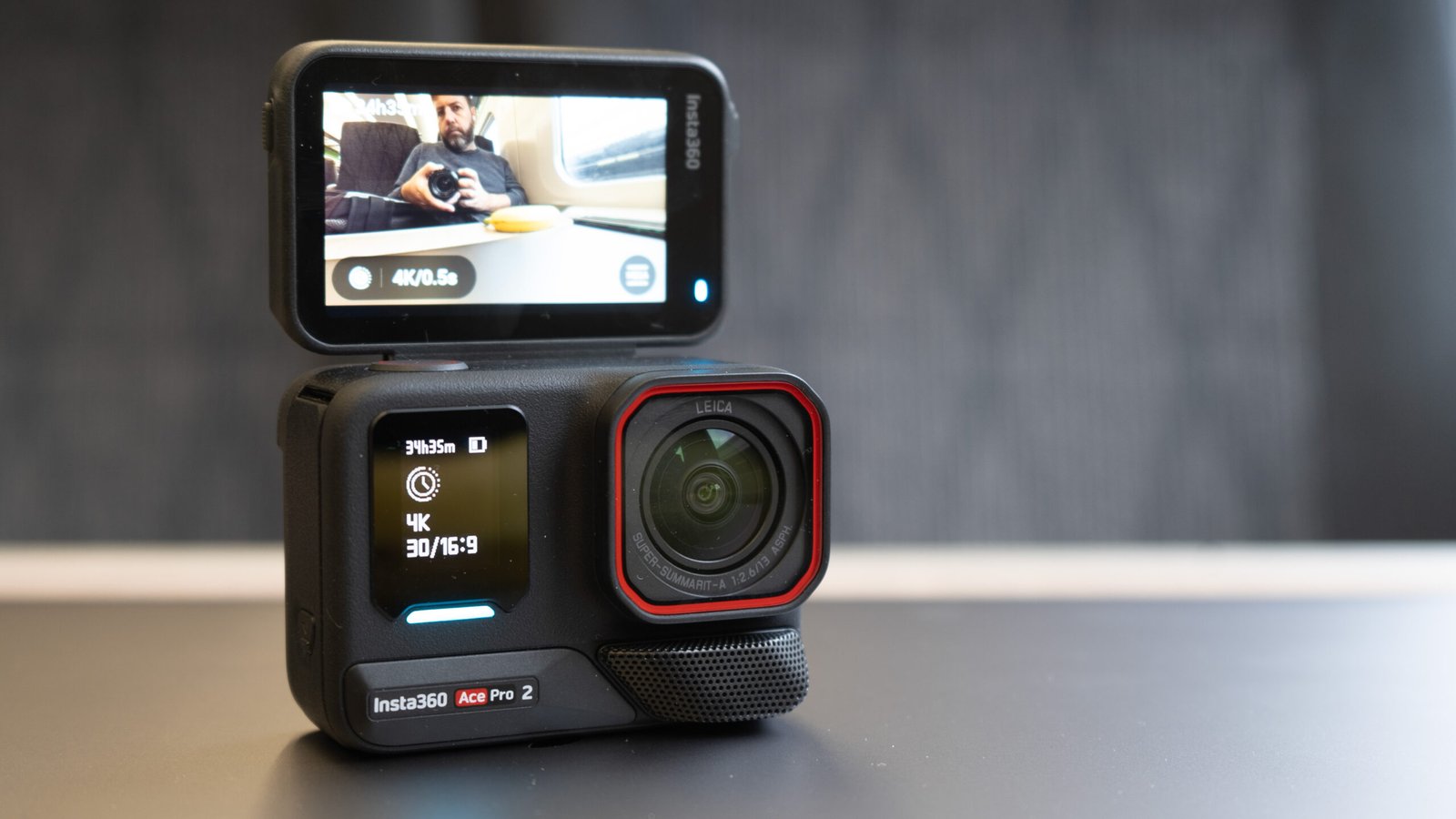
Choosing the right gear for capturing your outdoor adventures often boils down to two main contenders: the dedicated action camera or your trusty smartphone. Many outdoor enthusiasts grapple with this decision, fearing they might pick the wrong device and miss out on once-in-a-lifetime shots. The truth is, each excels in different areas, and understanding these differences is key to making the best choice for your next journey.
Key Takeaways
- Action cameras offer superior durability and specialized mounting options for extreme activities, ensuring your device survives rough environments.
- While smartphones boast computational photography for stunning everyday images, action cameras are engineered for sustained, high-intensity video recording without throttling.
- Consider the total ecosystem cost, including accessories like mounts and external power, as this significantly impacts the real-world utility and longevity of your chosen capture device.

Edge Pro Action Camera, 4K Vlogging …

DJI Osmo Action 5 Pro …
Built for Battle: Durability and Design for the Wild
Action cameras are designed from the ground up to endure punishing environments, unlike the delicate nature of most smartphones. They are inherently rugged, often waterproof to significant depths without needing extra cases. This means less worry about accidental drops, water splashes, or even full submersion during intense activities.
"For capturing high-octane action in truly challenging environments, the dedicated action camera still reigns supreme due to its form factor, mounting versatility, and inherent ruggedness." – TechRadar Reviewer
Impact Resistance and Water Protection
Action cameras like those from GoPro or DJI come encased in durable plastics and rubberized finishes. This construction shrugs off drops onto rocks or asphalt, a common occurrence during mountain biking or climbing. Most modern models offer waterproofing up to 10 meters (33 feet) right out of the box. You can take them surfing, snorkeling, or through a sudden downpour without a second thought. In contrast, smartphones, even those with IP68 ratings, are often described as "glass sandwiches," highly susceptible to screen cracks and water damage from impacts. Adding a robust case helps, but it adds bulk and cost, and still rarely matches an action camera's native protection.
A Common Mistake: Underestimating Environmental Stress
Many users assume their "water-resistant" phone is enough for adventure. This is a critical error. While a phone might survive a quick dip, sustained water exposure, high-pressure impacts, or grit from a trail ride will quickly overwhelm its defenses. Relying on a smartphone for truly extreme conditions often leads to costly repairs or lost footage.
Durability Score: Action Camera vs. Smartphone (Higher is Better)
Action Camera: 9/10
Smartphone: 4/10
Unrivaled Stability and Mounting for Dynamic Shots
Action cameras are purpose-built for capturing footage from unique perspectives and maintaining smoothness even in the most chaotic scenarios. Their small size and specific design allow for an unmatched range of mounting options, and their stabilization technology is engineered for aggressive motion.
Mounting Versatility
Imagine strapping your camera to a helmet, a surfboard, or a bike frame. Action cameras are designed for this. A vast ecosystem of specialized mounts allows placement almost anywhere, opening up creative angles no smartphone can easily achieve. Users consistently praise this freedom: "I love my GoPro because I can strap it anywhere, crash my bike, and it just keeps recording." This flexibility is a core feature that gives you the advantage of unique, immersive footage, directly benefiting your storytelling with perspectives others can't get.
Hyper-Smooth Stabilization
Modern action cameras feature advanced electronic image stabilization (EIS) or even mechanical stabilization that rivals dedicated gimbals. This technology, often called "Horizon Lock" or "HyperSmooth," analyzes movement in real-time to create incredibly steady video, even during extreme vibrations. "The stabilization on my action camera is just insane," one user reports, "it makes my shaky mountain bike rides look smooth, much better than my phone's video without a gimbal." This means your high-speed downhill video looks professional, not like a dizzying blur.
Thermal Management and Extended Recording Durability
Dedicated action cameras possess superior thermal designs, allowing for significantly longer continuous 4K video recording compared to most smartphones. This crucial difference becomes apparent during extended use in warm conditions.
Sustained Performance Under Load
Smartphones are general-purpose devices. When pushed to record high-resolution video for prolonged periods, especially in warmer climates, their processors generate considerable heat. To prevent damage, phones employ thermal throttling, reducing performance or even stopping recording entirely. "My phone overheats and stops recording 4K video after about 15 minutes if it's hot out," a frustrated user shared. "It's super annoying when I'm trying to film a long hike segment." Action cameras, however, often feature internal heatsinks and optimized components specifically designed to dissipate heat efficiently, enabling them to record for upwards of 60-90 minutes in 4K without issue, depending on the model and settings. This feature provides the advantage of uninterrupted capture, benefiting those who need reliable, long-form footage without worry.
Powering Your Adventures: Battery Life and Swappability
Action cameras offer a distinct advantage in battery management through easily swappable power sources, crucial for multi-day expeditions. This contrasts sharply with smartphones' fixed battery designs.
Swappable Batteries for Endless Power
Imagine being deep in the backcountry, far from an outlet. With an action camera, carrying multiple spare batteries is standard practice. When one dies, you simply swap it out in seconds and keep recording. "Having swappable batteries on my DJI is a lifesaver on multi-day trips," one enthusiast noted. "Can't do that with my phone and external power banks are bulky." This feature offers the advantage of continuous power availability, directly benefiting adventurers on extended trips where recharging is difficult. For more insights on device longevity, you might find this article on Your Smartphone’s Secret Life: How Long Can It Truly Last? interesting.
Image Quality Evolution: Closing the Sensor Gap
While smartphones often excel with computational photography for static images, the newest action cameras are significantly improving their raw image capture capabilities, particularly in challenging light. This narrows the traditional gap.
Low-Light Performance and Sensor Size
Modern flagship smartphones leverage advanced software to combine multiple exposures, producing stunning detail and dynamic range, especially in good light. "My phone takes amazing photos and videos, and I can edit and share right away," a user explained. "Low light on my action camera is still kinda grainy compared to my new Samsung. For sunset camp photos, my phone always wins." However, dedicated action cameras are rapidly catching up. Newer models, like the Insta360 Ace Pro, feature larger sensors previously found only in higher-end cameras. "The biggest shift is action cameras catching up on sensor size," states an Independent Camera Reviewer, "making them viable for more than just bright daylight. This narrows the gap with phones in trickier lighting." This feature of larger sensors gives action cameras the advantage of capturing more light, benefiting those who need better quality footage in dawn, dusk, or shaded environments.
Ecosystem Investment: Beyond the Device Price Tag
The true cost and utility of your capture device extend far beyond its initial purchase price, encompassing a vital ecosystem of accessories. Many first-time buyers overlook these additional investments.
Hidden Costs of Accessories and Mounts
An action camera's versatility is unlocked by its accessories: helmet mounts, chest straps, floating hand grips, extra batteries, and specialized cases. While many essential items come bundled, building a comprehensive kit can easily add $100 to $300 to your initial investment. Think about storage too; high-resolution footage demands large, fast microSD cards, which can cost an additional $30-$100. For smartphones, the accessory world includes gimbals, external lenses, and power banks. The feature of a rich accessory ecosystem provides the advantage of extreme customization, benefiting users who demand specific shots or worry about long-term power supply. This broader view of equipment can often make the initial price comparison less straightforward.
User Interface in Action: Buttons vs. Touchscreens
The practical ease of operation during an activity heavily favors the physical controls of an action camera over the touch-centric interface of a smartphone. This is a critical distinction for active users.
Operating with Gloves or Wet Hands
Imagine trying to tap a tiny icon on a smartphone screen with thick gloves, or with wet, cold hands. It's often impossible. Action cameras typically feature large, tactile buttons for core functions like recording, changing modes, and power. This feature provides the advantage of reliable operation in adverse conditions, benefiting skiers, divers, or cyclists who cannot afford to fumble with a touchscreen. This focus on practical ergonomics in harsh environments makes action cameras profoundly more user-friendly for their intended purpose.
Smart Capture and AI Integration: What's Doing the Thinking?
Both device types are increasingly leveraging artificial intelligence, but with different focuses: smartphones for computational photography and action cameras for intelligent action capture and post-processing. This shift redefines ease of use.
AI for Effortless Footage
Smartphones use AI to enhance photos, predict focus, and stabilize video in real-time. This "computational photography wizardry" makes everyday shots look professional. Action cameras are now integrating AI for features like intelligent highlight detection, automatically identifying the most exciting moments in your footage. Some can even use AI to create automatic highlight reels or reframed shots from 360-degree video, reducing your editing time. This feature offers the advantage of smarter, faster content creation, benefiting users who want to share compelling stories without hours of manual editing. However, be aware that your Phone’s New AI is a Privacy Nightmare and always be careful about what data you share.
Conclusion: Choose Your Weapon Wisely
The choice between an action camera and a smartphone isn't about one being inherently "better." It’s about aligning the tool with the task. For the casual outdoor enthusiast capturing sunsets or group photos, a modern smartphone offers incredible quality and convenience. Its computational photography and instant sharing capabilities are unmatched for everyday moments. However, if your adventures involve high speeds, extreme elements, or rugged environments, the action camera stands as the undisputed champion. Its inherent durability, superior stabilization, thermal resilience for long recordings, and unmatched mounting flexibility make it the only reliable choice for truly capturing the action. Understand your needs, consider the full ecosystem, and choose the device that will best serve your next grand adventure. For a deeper dive into why dedicated cameras often surpass phones, consider reading Why Dedicated Cameras Still Outperform Smartphones.
Quick Action Plan:
- Assess Your Activity Level: Will you face water, impacts, or extreme speeds? If yes, lean action camera.
- Evaluate Recording Duration: Need continuous 4K video for over 20 minutes? An action camera is your best bet.
- Consider Your Budget: Factor in accessories like mounts and extra batteries for action cameras.
Frequently Asked Questions
Can a high-end smartphone really replace an action camera for all outdoor activities?
No, not for all activities. While high-end smartphones offer impressive video quality and stabilization in good conditions, their fragility and thermal limitations prevent them from truly replacing action cameras in scenarios involving direct impacts, deep water submersion, or extended 4K recording in hot weather. An action camera is purpose-built for those extreme situations.
Are action cameras difficult to use for beginners?
Not at all. Most modern action cameras feature intuitive interfaces with simple physical buttons and touchscreens, making them very accessible for beginners. Many also include automated shooting modes and in-camera editing features, simplifying the process of capturing and sharing footage. Some models even have AI that creates highlight reels automatically.
What about the audio quality difference between the two?
Smartphones often have decent built-in microphones for general use and conversations. However, for action, action cameras frequently offer better wind noise reduction and, crucially, support for external microphones for clearer audio in noisy environments or for vlogging. This is a significant advantage for capturing narrative alongside the visuals.
How has the gap in low-light performance changed recently?
The low-light gap is narrowing significantly. Historically, smartphones dominated due to larger sensors and computational photography. However, newer action cameras are incorporating larger sensors and improved image processing, making them much more capable in dimmer conditions than previous generations. While phones might still win in static low-light photos, action cameras are closing the video gap considerably.
Is the investment in an action camera ecosystem truly worth it for occasional use?
For truly occasional, very light use, a smartphone might suffice. However, if your "occasional use" involves any risk of impact, water, or the need for unique mounting perspectives, the investment in an action camera and its essential ecosystem (mounts, extra battery) is absolutely worth it. It provides peace of mind and superior, reliable footage that a smartphone simply cannot deliver under those specific stresses.