Delivering trusted U.S. technology and AI business insights—crafted daily with expert analysis and market impact.

Apple Shifts Mac Mini Production to US After Years of Political Pressure
Tech giant Apple announces it will move some Mac Mini production to the US, a major step following years of political pressure to boost domestic manufacturing.

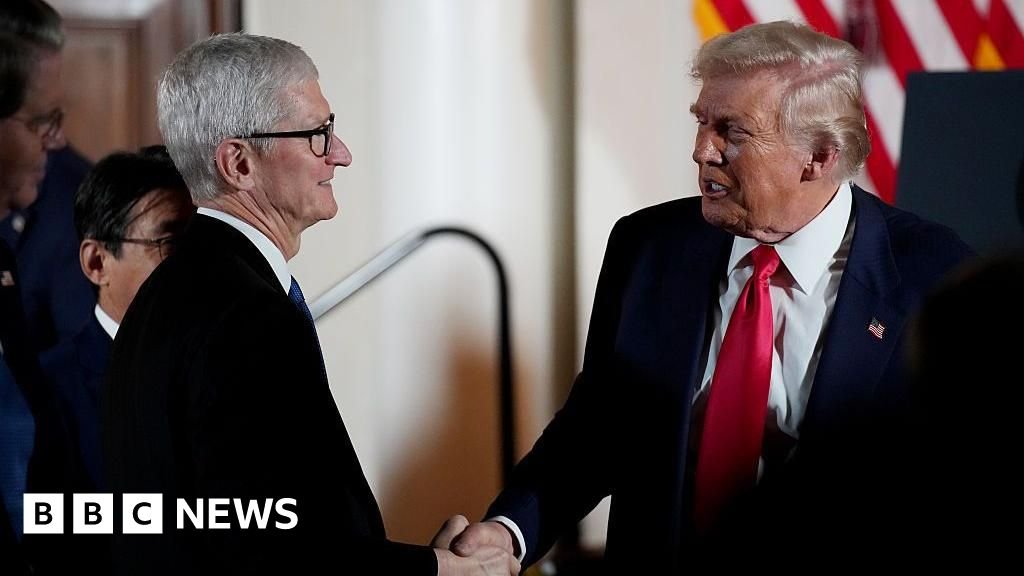
In a significant move, tech giant Apple has announced that a portion of its Mac Mini desktop computer production will be relocated to the United States. This decision marks the first time the popular compact computer will be manufactured on American soil, signaling a response to sustained pressure from political figures like former President Donald Trump to bring jobs back to the country.
Apple revealed plans for a "significant expansion" of its factory in Houston, Texas. This facility will not only assemble the Mac Mini but also produce specialised artificial intelligence (AI) servers. The company's CEO, Tim Cook, stated, "Apple is deeply committed to the future of American manufacturing, and we're proud to significantly expand our footprint in Houston." As part of this expansion, Apple also plans to establish an advanced manufacturing training centre at the same location.
This development is part of a larger promise Apple made last year to increase its investment in the US by a massive $600 billion. For years, the company has faced criticism and threats of higher import taxes, known as tariffs, from Trump's administration. The former president specifically urged Apple to move its iPhone manufacturing, which is currently centered in China, Vietnam, and India, to America.
The Mac Mini, a small but capable desktop computer, is considered a niche product, making up less than 5% of all Mac sales. Until now, these devices have been produced in Asia. While the company did not specify the exact volume of production moving to the US, the decision is seen as a major symbolic gesture.
| Key Details of the Move |
| :— | :— |
| Product | Mac Mini Desktop Computer |
| New Location | Houston, Texas, USA |
| Current Location | Various locations in Asia |
| Additional Production | Artificial Intelligence (AI) Servers |
| Associated Investment | Part of a $600 billion US investment pledge |
Apple has been heavily affected by the tariffs imposed during Trump's second term, costing the company over $3 billion. The political pressure has been direct, with Trump even threatening to increase tariffs on Apple products if they didn't comply. This complex relationship also saw Apple CEO Tim Cook donating $1 million to Trump's inaugural committee. Analysts caution, however, that while this is a notable step, making substantial changes to Apple's vast global supply chain, which is essential for products like the iPhone, would be a slow and complicated process. Following the announcement, Apple's shares on the stock market saw a healthy increase of over 2%.
News Analysis Report
This move by Apple can be interpreted as a strategic response to the shifting geopolitical landscape. For years, American companies have benefited from global supply chains, primarily in Asia, to reduce costs. However, growing political pressure in the US for domestic job creation and manufacturing has forced giants like Apple to re-evaluate their strategy. While moving a low-volume product like the Mac Mini is not a fundamental operational shift, it is a powerful public relations and political move. It allows Apple to demonstrate its commitment to the American economy without disrupting the highly efficient and complex supply chain for its flagship product, the iPhone.
Our Opinion
While the news is significant, it's important to view it with perspective. This is more of a calculated political step than a revolutionary change in Apple's manufacturing philosophy. The core of Apple's production for high-volume items like the iPhone will likely remain in Asia for the foreseeable future due to the established infrastructure and cost advantages. For consumers in Bangladesh and globally, this change is unlikely to affect the price or availability of the Mac Mini in the short term. It primarily serves as a message that Apple is listening to political demands in its home market.