Delivering trusted U.S. technology and AI business insights—crafted daily with expert analysis and market impact.

Europe’s New Space Race: Rockets Compete in the Freezing Arctic
From the snowy plains of Sweden to remote Norwegian islands, a fierce new space race is underway. Discover why Europe is desperately trying to launch its own satellites.

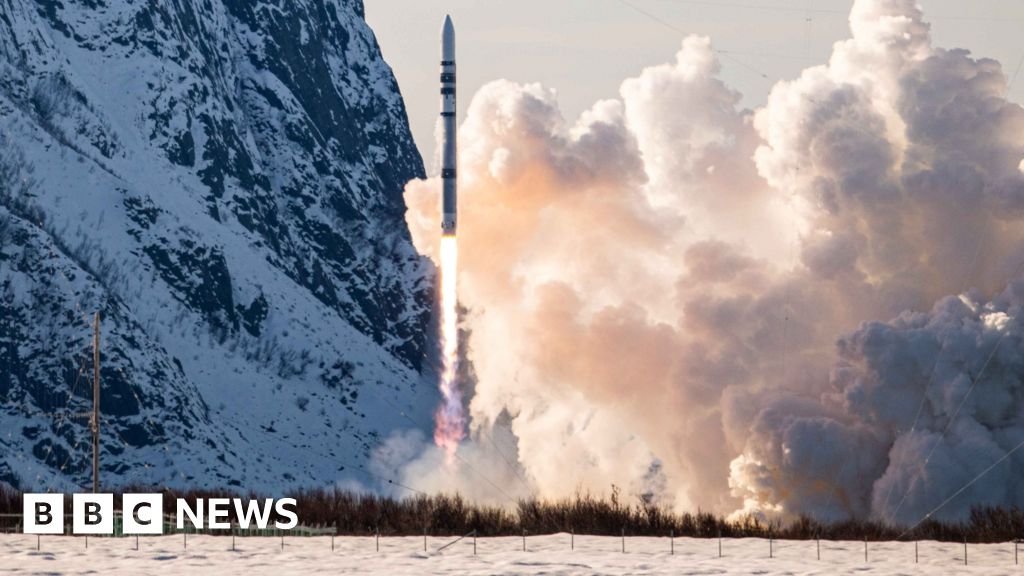
Imagine a snow-covered hill deep inside the Arctic Circle, in the middle of the night. Suddenly, a countdown breaks the silence, and a rocket roars into the sky, lighting up the dark valley. This isn't a scene from a movie; it's the reality at Sweden's Esrange Space Centre, the new frontline of a fierce European competition to control its own access to space.
For decades, Esrange has been launching research rockets that go up and come back down. But now, it's aiming much higher. "Within a couple of years, we will have the first satellite launch from here," says Mattias Abrahamsson, a business development director at the Swedish Space Corporation (SSC), which runs the facility. The goal is to put satellites into orbit, circling the Earth, a capability Europe urgently wants to develop on its own soil.
Why the sudden rush? The number of satellites above us is exploding. Today, there are about 10,000. Soon, that number could hit 50,000, driven by the demand for satellite internet, better mapping, and communications. This has created a massive market, and Europe no longer wants to depend on American or Russian rockets to launch its satellites. The war in Ukraine has made this need for <u>European self-reliance</u> even more critical.
This ambition has sparked a continent-wide race. Several locations are competing to become Europe's go-to spaceport.
| Launch Competitor | Location | Key Partner(s) |
|---|---|---|
| Esrange Space Centre | Sweden (Arctic North) | Firefly (USA), Perigee (S. Korea) |
| Andøya Spaceport | Norway (Arctic Island) | Isar Aerospace (Germany) |
| SaxaVord Spaceport | Scotland (Shetland) | Rocket Factory Augsburg (Germany) |
| Atlantic Spaceport | Portugal (Azores) | Various start-ups |
The journey is not easy. Competition is tough, and failure is common. Sir Richard Branson's Virgin Orbit shut down after a failed launch from the UK. In Norway, a rocket from the German company Isar Aerospace crashed into the sea just 30 seconds after lift-off from the Andøya Spaceport. However, Isar Aerospace is determined to try again soon, a mission that could be a giant leap for Europe if successful.
Meanwhile, Sweden's Esrange is building new infrastructure and recently signed a major technology agreement with the USA, allowing advanced American rocket tech to be used there. They are preparing for launches by American company Firefly and South Korea's Perigee.
Experts believe that while there will be winners and losers, the need for multiple launch sites is real. "Spaceports will be like seaports, and you will need multiple for the amount of traffic, but also for resilience," explains Hermann Ludwig Moeller of the European Space Policy Institute. He predicts we will see a successful orbital launch from continental Europe this year.
Currently, the global launch market is dominated by other powers. Last year's successful orbital launches show a clear picture:
- USA: 189 launches
- China: 90 launches
- Europe (from French Guiana): 7 launches
This highlights the gap Europe is racing to close. The new spaceports in the Arctic are not just commercial ventures; they are a strategic necessity for Europe's future in technology, security, and defence.
News Analysis Report
The intense push for European spaceports is a direct response to a changing world. For years, Europe relied heavily on Russia's Baikonur Cosmodrome and American sites like Cape Canaveral. The invasion of Ukraine and subsequent sanctions against Russia ended that partnership, creating a launch crisis for Europe. This race is therefore not just about capturing a slice of the commercial satellite market; it's about geopolitical strategy. Achieving <u>sovereign launch capability on European soil means Europe can deploy critical communication, navigation, and defence satellites quickly and independently, especially during a crisis. It represents a fundamental shift towards strategic autonomy in an increasingly competitive global arena.
Our Opinion
This competition among European nations to build the best spaceport is a high-risk, high-reward game. Not all of these ambitious projects will succeed, and we can expect more failures before we see consistent success. However, this intense rivalry is a powerful engine for innovation. It forces companies and countries to develop better, cheaper, and more efficient rocket technology. The ultimate winners will be those who can offer reliable and cost-effective launches. For Europe as a whole, even having two or three successful spaceports would be a monumental achievement, securing its place as a major independent power in the final frontier.
Source