Smartphone reviews, tips, news, guides, and updates for Android & iPhone.

Vivo vs. Xiaomi: The Brutally Honest 2026 Comparison for Savvy Buyers
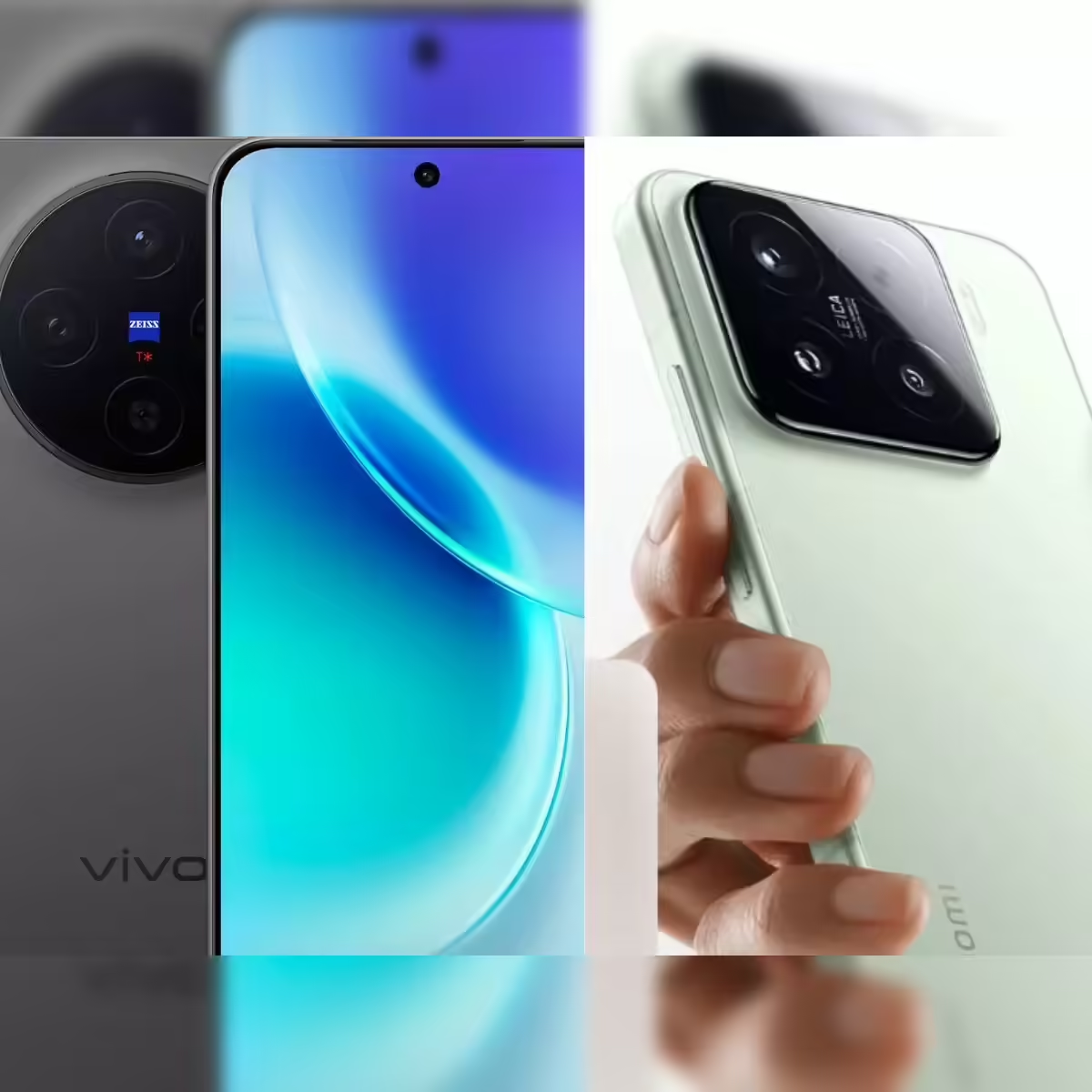
Caught in the crossfire between Vivo and Xiaomi? You're not alone. One brand tempts you with professional-grade camera features, the other with flagship performance at a fraction of the cost. The internet is a battlefield of conflicting user reviews and spec sheets that tell only half the story. Making the wrong choice means two years of frustration with a device that doesn't fit your needs, a classic case of buyer's remorse.
This decision feels impossible. You hear about Vivo's legendary Zeiss-tuned cameras, perfect for portraits, but then a Reddit comment mentions pictures can be over-processed. You see Xiaomi packing a top-tier Snapdragon chip into a mid-range phone, but then another user warns that Xiaomi takes an eternity to update their devices, if at all. This analysis paralysis is real, leaving you stuck and worried about wasting your hard-earned money.
This guide cuts through the noise. We'll break down the core differences, using real user opinions and expert analysis to give you the clarity needed to choose the right phone for you.
In a Nutshell
- Vivo for the Visuals: Prioritize Vivo if your main goal is best-in-class camera quality, especially for portraits and low-light shots, and you appreciate a premium in-hand feel and a cleaner software experience.
- Xiaomi for the Value: Opt for Xiaomi (including its Redmi and POCO sub-brands) if you want the absolute most raw performance and fastest charging speeds for your money.
- Software is the Swing Vote: Your preference for a clean, stable OS (Vivo's FuntouchOS) versus a feature-packed, highly customizable one (Xiaomi's HyperOS) could be the ultimate deciding factor.
Camera Clash: Zeiss Artistry vs. Leica Power
The core difference in camera philosophy is that Vivo partners with Zeiss to achieve artistic portrait and zoom capabilities, while Xiaomi collaborates with Leica for vibrant color science and high-resolution sensors. Vivo's premium X-series phones are often lauded for their telephoto and low-light portrait performance, giving them a distinct edge for photography enthusiasts. Xiaomi, however, delivers incredibly capable camera hardware at more aggressive price points, making it a strong all-around performer.
Vivo's heavy investment in imaging R&D is obvious. Their flagship models, like the conceptual Vivo X300 Pro, boast powerful Zeiss-tuned systems with massive periscope telephoto lenses. This is why users who want consistency and powerful zoom often lean towards Vivo. As one user put it, comparing their Xiaomi to a Vivo, "The consistency is huge compared to xiaomi."
Xiaomi isn't far behind, with its flagship 17 Ultra featuring Leica optics and equally impressive sensors. The choice often comes down to processing preference. Some users find Vivo's processing, which often sharpens images for a crisp look, to be a unique selling point, while others find it too aggressive. The final image is subjective, with die-hard fans on both sides.
Performance & Price: Who Delivers More Bang for Your Buck?
Xiaomi has built its brand on offering superior performance-to-cost value, frequently equipping its mid-range phones with processors found in competitors' flagship devices. If raw power for gaming and multitasking is your priority on a tight budget, Xiaomi and its sub-brands are almost always the answer.
This is a consistent sentiment among users. One Quora user stated plainly, "Xiaomi phones provide the best price to performance ratio or in budget range they are best." They achieve this by balancing high-performance chips with other components, a formula that appeals to value-seekers.
Vivo, on the other hand, focuses on a more balanced, holistic experience, especially in its higher-end models. They tune their hardware for smooth display performance and efficient camera processing rather than just chasing the highest benchmark scores. For intense but short gaming sessions, a Xiaomi might feel snappier, but for longer sessions, a comparable Vivo might offer better thermal control and consistency. If you're a serious gamer on a budget, our IQ 15R Review: This $500 Phone Is an Unfair Advantage for Gamers shows how Vivo's sub-brand tackles this space.
Software Experience: Clean & Stable or Feature-Rich & Flawed?
The software divide is stark: Vivo's FuntouchOS is generally regarded as a cleaner, more stable, and less ad-intrusive experience, whereas Xiaomi's HyperOS (formerly MIUI) is known for its deep customization and feature set but has faced heavy criticism for bloatware and ads.
For many users, this is the most critical differentiator. A Reddit user's comment reflects a common preference: "Funtouch OS is far better than MiUI. Haven't encountered any bugs on using funtouch OS for many years." This stability is a huge plus. While Funtouch has been criticized for being less intuitive in the past, recent versions have moved closer to a stock Android feel.
Conversely, Xiaomi's software is a double-edged sword. While feature-rich, it has historically been plagued by ads in system apps and inconsistent update schedules. As one frustrated user exclaimed, "XIAOMI TAKES AN ETERNITY TO UPDATE THEIR DEVICES." While ads can often be disabled, the presence of bloatware remains a concern for many users who prefer a cleaner interface.
Long-Term Durability and Resale Value
One of the most overlooked factors is how these phones hold up over time. In my observation of market trends, there's a growing user concern about the long-term reliability of devices pushed out with aggressive price tags. While both brands offer premium builds with glass and metal on their flagships, user anecdotes suggest a potential divergence in longevity.
A recurring theme in user forums is the perception of declining durability in some Xiaomi models. One user noted, "Previously, their phones last until 4 years but now, I am noticing that most of their phones last for about two years (usually due to a system update that leaves it dead)." This points to potential software and hardware integration issues under long-term stress.
Vivo, while not immune to issues, often puts a heavy emphasis on ergonomic and futuristic designs which can translate to a more robust feel. However, some reports indicate that Vivo phones may have a poorer resale value, with prices dropping significantly just months after release, a crucial factor if you upgrade often.
After-Sales Service: Who Has Your Back?
Your relationship with a brand doesn't end at purchase. After-sales support is a critical, and often frustrating, part of ownership. Both brands have extensive service networks in key markets like India’s Smartphone Market: Explosive Growth, Premium Push & User Realities.
However, the quality of that service can vary dramatically. Recent reports suggest Vivo's customer satisfaction has been slipping, with users citing high repair fees and inefficient service. One report from 2025 noted that Vivo placed last among major brands in a customer satisfaction survey, with spending on after-sales service dropping by 18% even as R&D spending rose.
Xiaomi's service has been described as a "mixed bag." Some users experience quick, affordable repairs, while others face long waits for spare parts. Neither brand has a perfect record, making it essential to check for service center proximity and local reviews before buying.
Final Verdict: Your Personal Priority List
The debate between Vivo and Xiaomi isn't about which brand is definitively "better," but which is better for a specific type of user. The choice is less overwhelming when you filter it through your own non-negotiable priorities.
Choose Vivo if:
- Your primary use case is photography, especially portraits and zoom shots.
- You value a clean, stable software experience with minimal bugs and ads.
- A premium, ergonomic design and in-hand feel are important to you.
Choose Xiaomi if:
- You want the maximum raw processing power and performance for your money.
- Lightning-fast charging is a must-have feature for your lifestyle.
- You love to customize every aspect of your phone's software and need a feature-rich OS.
Ultimately, both brands produce excellent hardware. The decision hinges on whether you're willing to trade software polish for raw power (Xiaomi) or pay a premium for a refined camera and user experience (Vivo). Which side of that trade-off do you fall on?