Delivering trusted U.S. technology and AI business insights—crafted daily with expert analysis and market impact.

UK Startup Claims Self-Driving Cars Will Master Even Pothole-Filled Roads
British firm Wayve secures a massive $1.5 billion, promising its AI-driven cars can navigate any road, even those with potholes. A London launch is near.

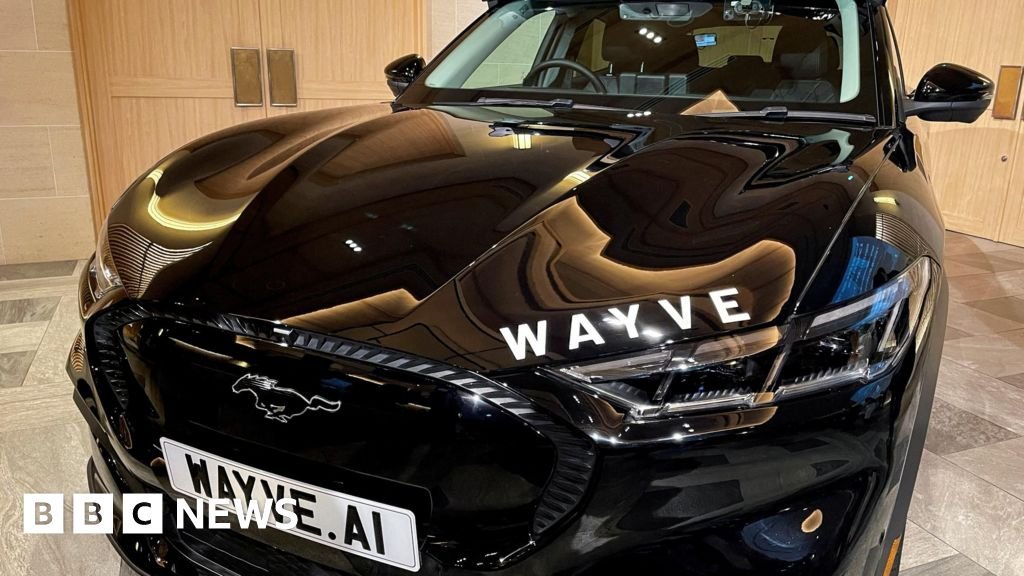
A British technology startup, Wayve, is making a bold promise that might sound like a dream for many drivers: their self-driving cars can handle any road, including those filled with potholes.
To back this ambitious claim, the company has just secured a massive $1.5 billion (£1.1 billion) in new funding from major investors, including tech giants Microsoft and Nvidia. This is one of the largest investment rounds ever for a British company, valuing the London-based business at approximately $8.6 billion.
This news comes as Wayve prepares to launch its 'robotaxis' in London later this year through a partnership with Uber. The company's boss, Alex Kendall, expressed confidence that their autonomous vehicles will soon be common on roads far beyond the capital. When asked if common road hazards like potholes would be a problem for the cars, he confidently replied, "not at all".
"The AI has the intelligence to drive on roads, the same ones as you and I, just drive within the environment that we have today," Mr. Kendall explained. He noted that the technology has already been tested across various UK terrains, from rural parts of England to the complex, busy streets of central London.
What makes Wayve's technology different is its approach. Instead of relying on highly detailed, pre-made maps that need constant updating, its AI learns to drive by processing live data from its sensors. In simple terms, it learns from its environment and experience, much like a human driver does. Alex Kendall highlighted that training an AI in London's chaotic traffic is a much bigger challenge than on the "grid-like streets and wide boulevards you get in the United States".
However, Wayve is not the only company in this race. The market for autonomous vehicles in the UK is heating up with major international players entering the scene.
| Company | Key Partner(s) / Owner | Technology Approach | UK Launch Status |
|---|---|---|---|
| Wayve | Microsoft, Nvidia, Uber | AI that learns from sensors | Robotaxis planned for London later this year |
| Waymo | Google (Alphabet) | Primarily uses pre-mapping | Hopes to launch in the UK by September |
| Lyft | Baidu (China) | Partnership-based entry | A UK launch is planned |
Experts believe this massive investment shows that autonomous driving technology is reaching a commercially mature stage. However, Rachel Harris, a supervising associate at law firm Simmons & Simmons, pointed out that there are still potential roadblocks. "The critical question is whether regulation can keep pace," she stated. If these regulatory hurdles can be overcome, the UK could position itself as a global leader in both developing and regulating this futuristic technology.
News Analysis Report
The massive $1.5 billion funding for Wayve highlights a major shift in the autonomous vehicle industry. While early pioneers like Google's Waymo focused heavily on creating perfect digital maps of roads, Wayve's 'learn-from-experience' AI represents a more flexible and potentially scalable approach. This method could be crucial for deploying self-driving cars in cities with less predictable infrastructure, like those in many developing nations. The intense competition now brewing in the UK between American, British, and Chinese-backed firms signals that Europe is becoming the next major battleground for dominance in the autonomous transportation market.
Our Opinion
The promise of a self-driving car that can navigate roads riddled with potholes is revolutionary, especially from a local perspective where road quality is a constant concern. While the technology is impressive, its real-world success will ultimately depend on three factors: flawless safety performance, public trust, and clear government regulations. If Wayve can deliver on its bold claims, it could fundamentally change urban mobility, but the journey from a London trial to widespread adoption will be long and requires careful oversight to ensure public safety remains the top priority.